Africa’s Choice: Transformation or a Self-Inflicted Stagnation

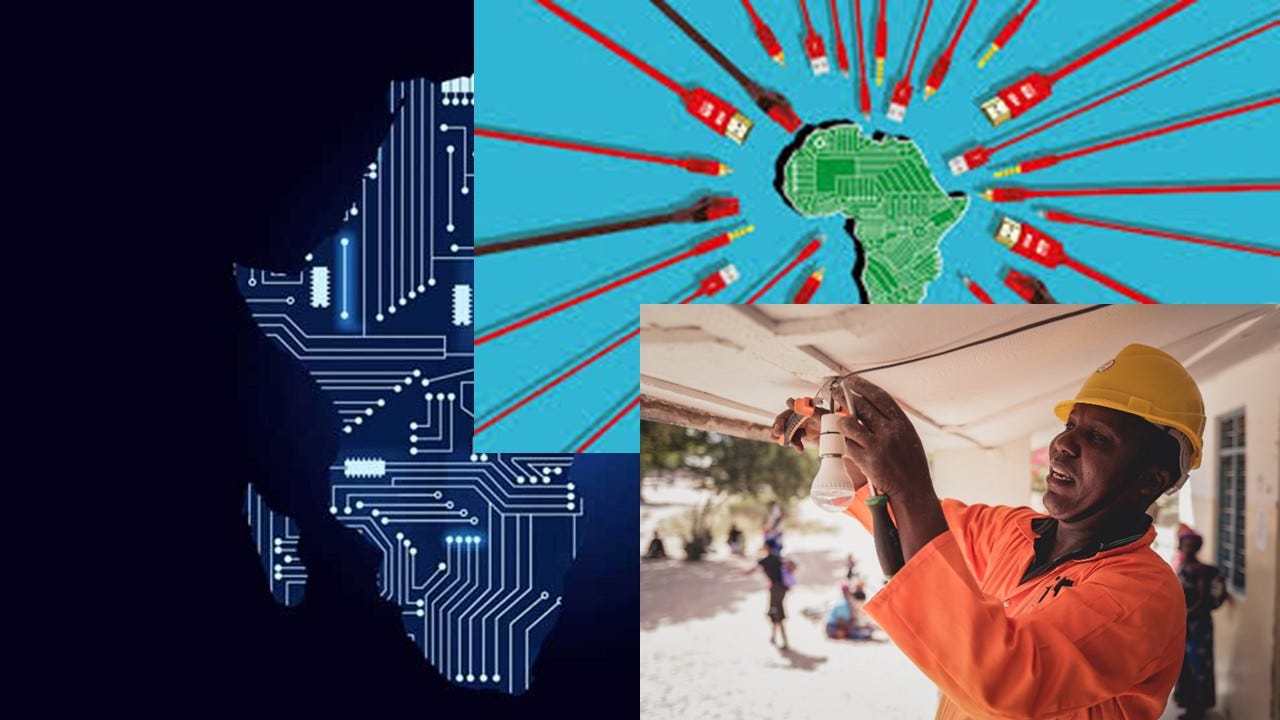
Africa’s Choice: Transformation or a Self-Inflicted Stagnation
For a decade, the “Africa Rising” narrative suggested that growth alone would propel the continent toward prosperity. Yet today, Africa stands on the brink of another lost development decade. Growth is slowing, poverty is rising, and political instability is spreading. The problem is not the absence of growth—it is the absence of transformation.
Africa’s stagnation is too often attributed to external shocks or colonial legacies. But the more urgent truth is internal: many African governments are disempowering themselves. Political incentives reward patronage over productivity, short-term survival over long-term capability, and consumption over strategic investment. The result is a continent that generates growth but fails to convert it into lasting structural change.
Governance Failure as the Central Constraint
The core of Africa’s crisis is governance regression. Democratic institutions persist in form but erode in substance. Coups, constitutional manipulation, and authoritarian drift reveal states that lack credibility, capacity and strategic direction. Bureaucracies are politicized, implementation is inconsistent, and reform is routinely announced but rarely executed.
This is not just political decay—it is an economic barrier. No country has industrialised with weak institutions or unstable rules. Growth without institutional transformation produces the fragility now visible across the continent.
A Structurally Dependent Economy
Africa remains stuck at the periphery of the global economy. It continues to export raw materials and import nearly everything else. This dependency is reinforced by commodity price cycles, rising external debt, weak manufacturing bases, and limited technological capability.
When crises hit, many states revert to the same strategies that caused their vulnerability. Instead of restructuring, they borrow more, liberalise without domestic capacity, or deepen reliance on external actors for technology, finance and even policy direction.
The Risk of Missing the 21st Century
Global production systems are shifting toward digitalisation, automation, and green industries. But these new technologies raise entry barriers, and Africa is falling behind. “Dark factories” in Asia and Europe—fully automated, high-output industrial sites—are eliminating the very labour-cost advantage on which African industrialisation strategies once depended.
Africa risks irrelevance not because it lacks people, land or markets, but because it lacks the strategic capability to turn these assets into competitive strengths.
A Call to Agency, Not Fatalism
Africa still has the resources to change course, but not the time to delay. Transformation requires political commitment, institutional rebuilding and disciplined economic strategy.
1. Rebuild capable and accountable states. Professionalise public administration, strengthen planning, and create institutions that reward delivery, not patronage.
2. Shift from consumption to production. Industrial policy must be targeted, performance-based and oriented toward technological upgrading—not rhetorical.
3. Transform agriculture. Move beyond subsistence and make agro-industrialisation the engine of rural development and export diversification.
4. Make AfCFTA a production agenda. Regional integration must build cross-border value chains, transport corridors and energy systems—not just reduce tariffs.
5. Reclaim financial and policy sovereignty. Expand domestic capital markets, reduce dependence on costly external debt, and stem capital flight that undermines investment capacity.
The Narrow Window Ahead
Africa is at a decisive crossroads. One path leads to deeper dependency, institutional decline and frustrated demographics. The other leads to a continent that produces, competes, and governs with purpose. The outcome will not be determined by donors, markets, or historical narratives. It will be determined by African policymakers—and by entrepreneurs and citizens who demand a state capable of delivering development.
Transformation is possible. But the window is closing fast. The next decade will decide whether Africa moves from Africa Rising to Africa Transforming, or whether it resigns itself to a new era of self-inflicted stagnation.
See: Africa at a Crossroads: Governance Erosion and Economic Self-Disempowerment